RSS

A Little Goes a Long Way: Spring Home Maintenance Tips and Tasks

Spring brings renewed energy and a fresh start, making it the perfect time to tackle home maintenance tasks that prepare your property for the warmer months ahead. Completing a few proactive updates now can help homeowners avoid costly repairs later and keep their homes running efficiently.

According to Jeff Howells, a professional home inspector with Nu Level Inspections, many spring maintenance tasks focus on prevention rather than fixing existing problems. Taking action early can save both time and money in the long run.

Exterior Maintenance Checklist

After months of winter weather and fallen debris, spring is the ideal time to focus on the outside of your home. Start by cleaning gutters, lowering downspout extensions, and clearing out window wells. These steps help ensure proper drainage before heavy rainfall begins.

Homeowners should also visually inspect roof shingles from ground level to check for signs of damage, such as missing or torn sections. Addressing small roofing issues early can prevent larger problems later.

Deck inspections are another important task before summer entertaining season. Look for loose boards, signs of rot, or areas that may need tightening or repair to maintain safety and durability.

Landscaping also plays a role in protecting your home. Make sure the grading around your property allows water to flow away from the foundation. If pooling occurs, adding topsoil can help improve drainage and reduce potential moisture issues.

Finally, prepare your air conditioning unit by removing any winter cover and clearing away leaves or debris so the system is ready before temperatures rise.

Interior Maintenance Tasks for Spring

Inside the home, start by replacing the furnace filter, which should typically be changed every six months. Spring is a convenient time to improve indoor air quality and maintain system efficiency.

Flushing the water heater is another recommended maintenance step. Draining part of the tank helps remove sediment buildup that can shorten the appliance’s lifespan.

Homeowners should also make it a habit to replace batteries in smoke detectors and carbon monoxide alarms to ensure these safety devices remain reliable. Additionally, remember to reopen shut-off valves for exterior hose taps once freezing temperatures have passed.

Cleaning Household Equipment and Appliances

Spring is also an opportunity to clean essential household systems and appliances. The furnace humidifier can accumulate mineral deposits over winter and may benefit from soaking in vinegar or a cleaning solution to restore performance.

If your home has a heat recovery ventilator (HRV), clean both the filters and the core to maintain proper airflow and efficiency. Gas fireplace glass can be wiped down using a simple vinegar and water mixture, while the kitchen exhaust fan and filter can be cleaned with soap and warm water.

By completing these spring home maintenance tasks, homeowners can protect their investment, improve comfort, and ensure their property is ready for the months ahead. Even small efforts now can go a long way in preventing larger repairs and expenses in the future.

Click here to get more information.

Read

Creating a Home Inventory: Protect Your Belongings and Simplify Insurance Claims

Life can be unpredictable, and unexpected events such as fires, floods, or theft can occur at any time. Losing your home or personal belongings is already overwhelming, but having a home inventory prepared in advance can make the insurance claims process far more manageable.

When filing a claim, your insurance provider will require a detailed record of damaged or stolen items. If you have already documented your possessions, you can avoid the stress of trying to remember everything during a difficult situation. A home inventory helps save time, improves accuracy, and supports a smoother claims experience.

Maintaining an updated inventory also ensures your home insurance coverage reflects the true value of your belongings. Without proper documentation, homeowners may discover they are underinsured and face unexpected out-of-pocket expenses.

How to Create a Home Inventory

Building a home inventory does not need to be complicated. There are several practical methods you can use.

Pen and paper: Create a written list that includes descriptions of each item. Store this document in a secure place such as a lockbox or fireproof safe. Since paper can be misplaced or damaged, it is important to keep backup copies.

Digital spreadsheet: Using a spreadsheet allows you to easily organize belongings by category, include estimated replacement values, and attach photos. This option also makes it simple to share information with your insurance provider when needed.

Home inventory apps: Many insurers offer mobile apps designed to help homeowners track their possessions. These tools allow you to combine item descriptions, images, and values in one convenient location while making updates quick and efficient.

Tips for Building an Effective Home Inventory

Add detailed information: Include purchase dates, estimated values, serial numbers, and brand names whenever possible. Keep receipts for higher-value items.

Document all belongings: Remember to list everyday items such as clothing, accessories, electronics, and jewelry. Some valuables may require additional insurance coverage, so reviewing your policy with an advisor is recommended.

Take photos and videos: Capture images or video walkthroughs of each room, including closets and storage spaces. Label files with dates and update them regularly.

Store your records securely: Keep copies of your inventory, photos, and insurance policy in a fire-resistant location. Creating digital backups adds another layer of protection.

Review your insurance coverage: Confirm that your policy accurately reflects the total value of your belongings. Consider additional protection for expensive or specialty items.

Start gradually: If the task feels overwhelming, begin with one room at a time. Setting aside an hour each week can help you complete your inventory without added pressure. Update your list as you purchase new items.

Creating a home inventory is a simple but powerful step that can save you time, money, and stress when unexpected events occur. Starting today can provide valuable peace of mind for the future.

Click here to get more information.

Read

Condo vs. House: Which one is right for you in Calgary?

The Calgary housing market offers many opportunities for buyers. For first-time homebuyers, one of the biggest decisions is choosing between a condominium and a detached home. The right choice ultimately depends on your budget, lifestyle, and long-term goals.

What Is a Condo?

A condo is a privately owned residence located within a multi-unit building or community. This can include apartment high-rise towers, low-rise buildings, and some townhome developments. While each unit has its own owner, shared spaces such as hallways, amenities, landscaping, and building exteriors are maintained by a condo corporation.

As of February 28, 2026, the benchmark price for condos in Calgary was $298,600, making them one of the more affordable entry points into the real estate market.

What Is a Detached Home?

A detached home, often referred to as a house, is a standalone residential property that does not share walls or common areas with neighboring homes. In Calgary, detached homes typically offer private yards, driveways, and garages, providing more space and privacy for homeowners.

As of February 28, 2026, the benchmark price for detached homes in Calgary was $734,300, reflecting the higher cost associated with greater space and independence.

If you are still deciding which option is right for you, it helps to understand the pros and cons of owning a condo versus a detached home.

Owning a Condominium

Pros

  • Low-entry cost to enter the housing market

  • Free access to building amenities such as a gym, communal room for gatherings, pool, etc.

  • Building repairs are paid by the condo board, with the funds coming in from condo fees and the reserve fund

  • The condo board is responsible for the maintenance of common areas, such as hallways, elevators, parking garages and the building exterior

  • Condos are usually concentrated in busy areas, closer to downtown and the public transit system

Cons

  • You only own your unit and a share of the common property

  • Require payment of monthly condo fees (that can increase over time) and sometimes special assessments to cover shared services and maintenance costs

  • Less privacy given the close distance from unit to unit

  • Excluding penthouses, condos typically have less space compared to a house

  • Condo bylaws may limit unit renovations, rentals or pet ownership

Owning a House

Pros

  • Building and land ownership

  • Additional space compared to condos, including outdoor space

  • Liberty to customize the interior and exterior of your home, including repairs and renovations

  • More privacy, as you don’t share walls or common spaces with neighbours

Cons

  • High-entry cost to enter the housing market, with a higher downpayment required

  • You are responsible for your property’s maintenance, repair and renovation costs

  • Many detached homes can be further away from downtown and public transit areas

  • Higher property taxes

It’s important to flag that your first home doesn’t have to be your only home. As people experience lifestyle changes, they may expand from a condo to a house, while others downsize from a detached house to a condo.

If you’re getting started on your home-buying journey, know that a CREB® REALTOR® is a trusted source for all your real estate needs. Not only do they provide invaluable expertise, but they are also committed to a high standard of professional conduct focused on the consumer.

Click here to get more information.

Read

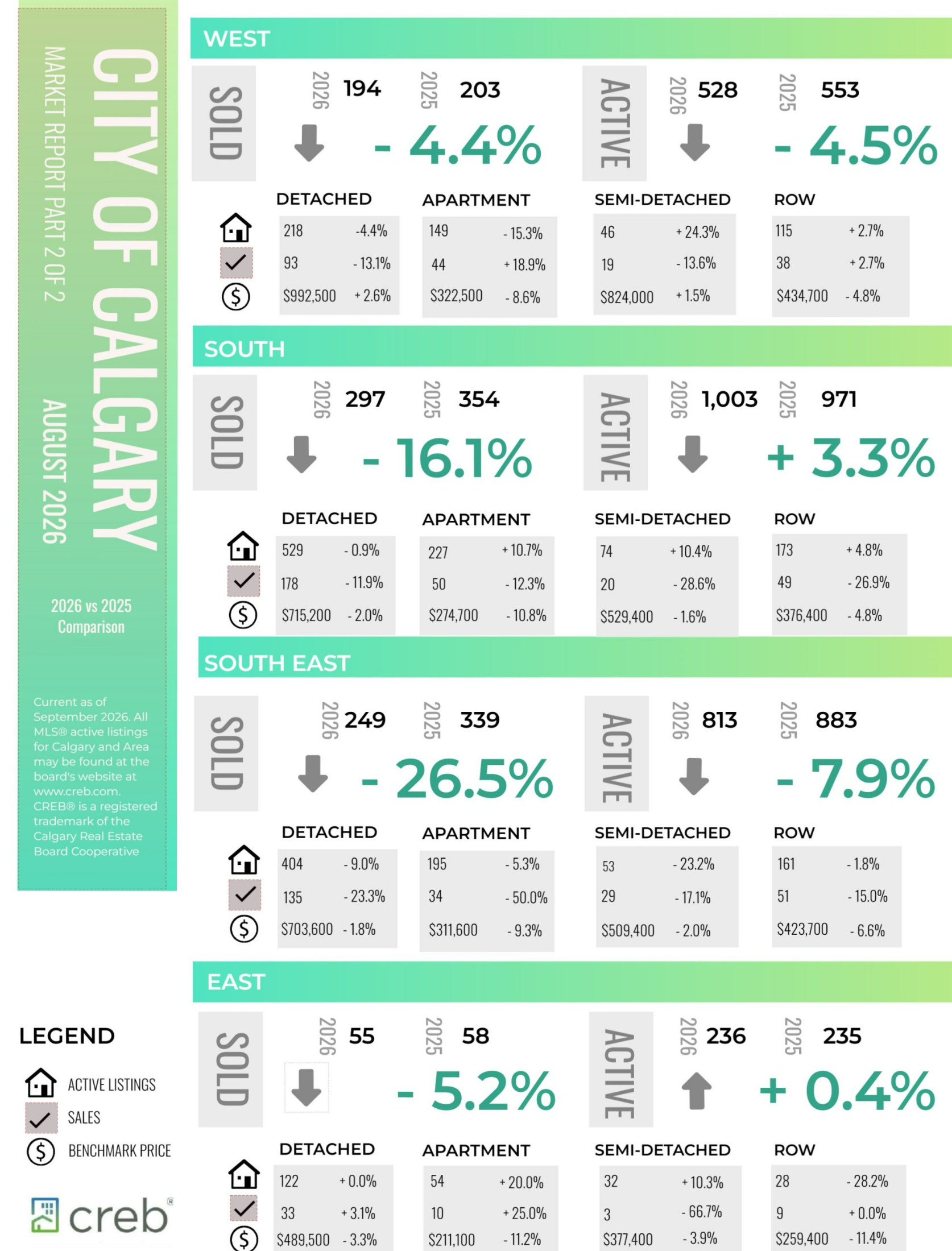
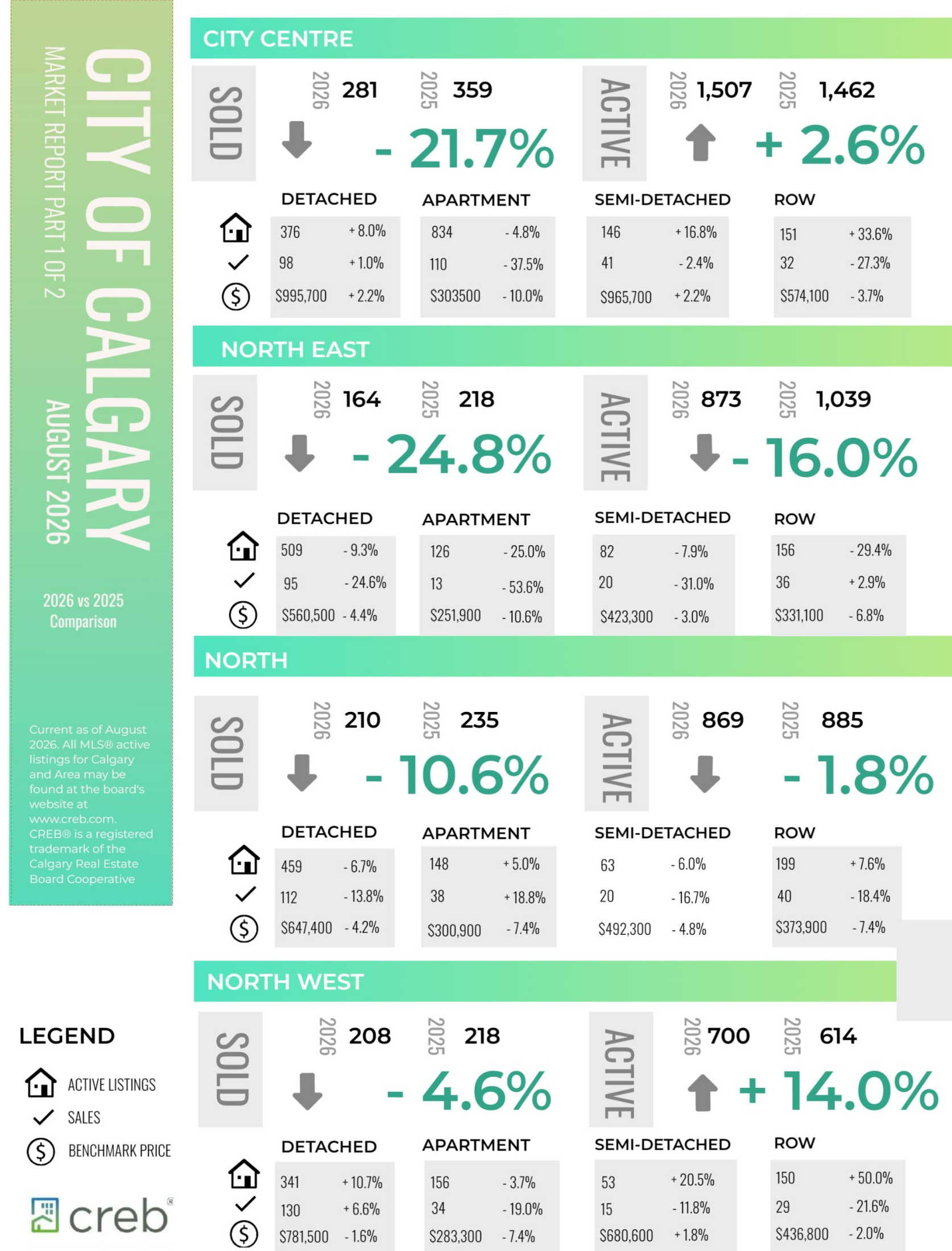
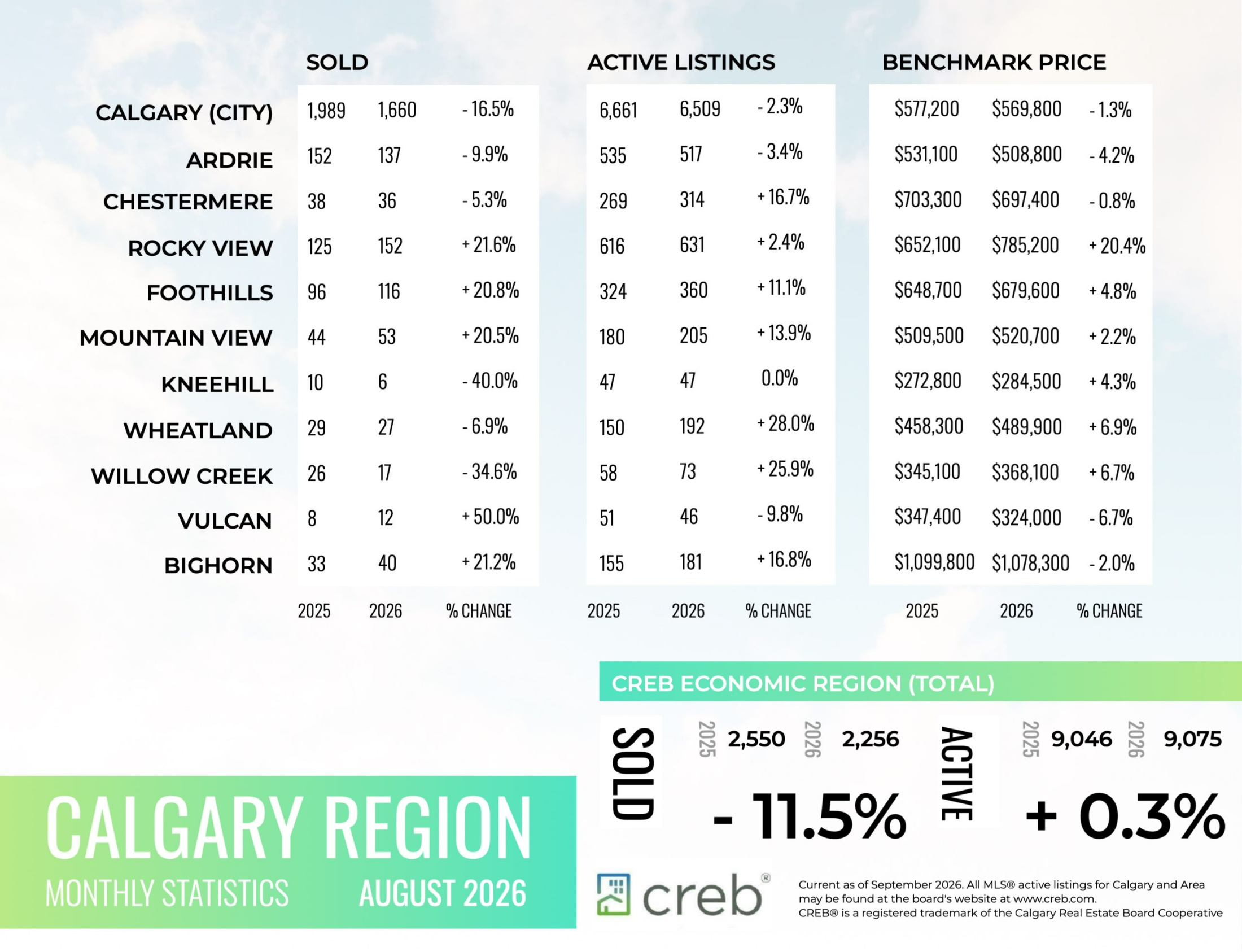
February 2026 CREB City And Region Market Reports

Detached market tightens while apartments remain oversupplied

Calgary’s housing market continued to show different conditions across property types in February. The tightest market conditions were seen in detached and semi-detached homes, both reporting less than three months of supply. Row homes had slightly more supply compared to demand but remained relatively balanced overall. In contrast, apartment-style properties are experiencing higher inventory levels, creating conditions that currently favor buyers.

“Slowing migration levels are coming at a time when supply for apartment-style homes is rising. Calgary reported record high starts last year, mostly due to gains in apartment starts where there are nearly 18,000 units currently under construction. While a large share of the units is targeted for rental, this also impacts condo ownership markets,” said Ann-Marie Lurie, CREB®’s Chief Economist. “Meanwhile, on the opposite end of the spectrum, the detached market remains relatively balanced in the higher price ranges and continues to struggle with limited supply for homes priced below $700,000.”

Read the full report on the CREB website!

Custom real estate infographics published by myRealPage.com

Read

Is the 2% Realty Model Too Good to Be True?

Wondering how 2% Realty can offer full-service real estate for less? Calgary’s leading low-commission experts explain the truth behind the model.

It may sound simple, and that’s because it is. The 2% Realty model was designed to challenge the outdated belief that exceptional real estate service must come with high commission fees. At 2% Realty Calgary, we deliver the same full-service experience you would expect from a traditional brokerage, including MLS® system exposure, professional marketing, skilled negotiation, and complete client support. The difference lies in our fair and transparent 2% commission structure.

We make this possible by leveraging efficient systems and advanced technology that reduce unnecessary overhead costs. This streamlined approach allows our agents to focus on what truly matters: achieving the best results for our clients. Every listing benefits from professional photography, targeted digital marketing campaigns, and personalized service from experienced REALTORS® who understand the Calgary real estate market.

Our clients receive comprehensive representation while saving thousands in commission. It is not too good to be true. It is simply a smarter, more modern way to buy and sell real estate. 2% Realty Calgary demonstrates that outstanding service and lower commission fees can work together seamlessly.

Click here to get more information

Read

How Calgary’s New Communities Are Changing the Market

Explore how Calgary’s newest master-planned communities are shaping the city’s housing trends with insights from 2% Realty Calgary.

Calgary is experiencing rapid urban expansion, driven by innovative master-planned communities that are redefining suburban living. High-demand neighbourhoods such as Seton, Livingston, and Alpine Park offer a dynamic mix of diverse housing options, top-rated schools, green spaces, retail hubs, and walkable amenities. These thoughtfully designed developments prioritize convenience, sustainability, and family-friendly planning, making them highly attractive to first-time homebuyers, move-up buyers, and growing families seeking long-term property value.

The surge of new construction in these communities is influencing Calgary’s overall real estate market trends. Increased competition among builders helps maintain housing affordability while elevating construction quality, architectural design, and modern features. Surrounding resale markets also benefit from heightened buyer demand, strengthening property values and boosting long-term appreciation potential in adjacent neighbourhoods.

At 2% Realty Calgary, our experienced real estate professionals closely monitor emerging community developments, pre-construction opportunities, and resale market performance. We guide clients through detailed comparisons between new builds and existing homes, helping them align their purchase with their lifestyle goals, investment strategy, and budget.

Calgary’s real estate growth story continues to evolve, and these forward-thinking master-planned communities are shaping the future of the city’s housing market, driving sustainable development, strong buyer demand, and modern community living.

Click here to get more information

Read

What’s Driving Calgary’s Real Estate Growth?

Population growth, jobs, and affordability — here’s why Calgary remains one of Canada’s most resilient housing markets.

Calgary’s real estate market continues to show strong housing growth, supported by steady population growth, stable employment rates, and relative affordability compared to other major Canadian cities. Families, professionals, and newcomers are attracted to Calgary for its quality schools, safe neighbourhoods, and diverse housing options that suit a wide range of budgets.

Economic stability remains a key driver of market strength. Expanding industries, job creation, and business investment continue to attract new residents, increasing both rental demand and homeownership activity. Major infrastructure projects, including new transit expansions and thoughtfully planned community developments, further enhance property values, connectivity, and overall livability.

At 2% Realty Calgary, we closely monitor these market trends and economic indicators to help our clients make strategic real estate decisions. Identifying high growth areas and understanding where future development is concentrated allows investors to target emerging communities with strong appreciation potential, while buyers can secure homes in neighbourhoods positioned for long term value.

Calgary’s housing market remains competitive because it successfully balances affordability, economic opportunity, and lifestyle appeal, making it one of Canada’s most attractive markets for both homeowners and real estate investors.

Read

Is Calgary’s condo market making a comeback?

2% Realty Calgary explores what buyers and investors should know this year.

In 2026, Calgary’s condo market is expected to remain balanced, creating favorable conditions for informed and strategic buyers. Ongoing affordability challenges in the detached home segment will likely keep condominiums in demand among first time buyers, downsizers, and real estate investors. With higher inventory levels available, competition may ease, giving buyers more negotiating power. Price growth is projected to stay moderate, with stability and gradual appreciation rather than rapid increases.

Urban condo communities, particularly in downtown, the Beltline, and transit oriented areas, are anticipated to perform more consistently. Demand from young professionals and renters seeking convenience, accessibility, and lifestyle amenities will continue to support these markets. At the same time, newer suburban condo developments may appeal to buyers searching for modern designs and competitive pricing. However, resale performance will still depend heavily on location, quality of building management, and reasonable condo fees.

Overall, 2026 is shaping up to be a year of steady and sustainable conditions for Calgary’s condo sector. Buyers and investors who focus on long term value, well managed buildings, and strong rental demand are likely to find great opportunities. Sellers may need to price strategically and highlight quality, upgrades, and location to stand out in a balanced and competitive real estate market.

Click here to get more information

Read

January 2026 CREB City And Region Market Reports

Slow start for high-density homes

Calgary reported 1,234 home sales in January, reflecting a 15% year-over-year decline, yet still aligning with typical activity levels for this time of year. While sales dropped across all property types, high-density homes, including apartments and row houses, saw the steepest decreases.

“Following the usual December slowdown, buyers of high-density homes were slower to return to the market in January,” said Ann-Marie Lurie, CREB®’s Chief Economist. “With more options available across the market, urgency among buyers has lessened. Meanwhile, sellers were quick to list their homes, driving the sales-to-new-listings ratio down to 44%, largely due to shifts in apartment and row-style properties. This trend is typical for January, as both buyers and sellers carefully consider their plans ahead of the spring market.”

The surge in new listings relative to sales pushed Calgary’s housing inventory to 4,391 units, the highest January level since 2020. Inventory levels differ by property type, with row and apartment homes seeing above-average supply. As a result, months of supply range from under three months for detached homes to five months for apartment-style properties, reflecting varying market conditions across property types.

Read the full report on the CREB website!

Custom real estate infographics published by myRealPage.com

Read

Five Neighbourhoods that Calgarians Love

Calgary is officially one of the best places to live in Canada! Ranked sixth on Numbero’s 2026 Quality of Life Index, 16 spots ahead of Edmonton, our city scores high for affordability, climate, healthcare, safety, and even traffic.

With over 1.7 million residents and 200 neighbourhoods to choose from, it’s no wonder Calgarians have their favourites. Since February is the month of love, we’ve rounded up five neighbourhoods that locals adore, whether to live in or simply visit.

1. Inglewood (SE)
As Calgary’s oldest neighbourhood, Inglewood oozes character and charm. It’s home to art galleries, international restaurants, unique boutiques, a bird sanctuary, and a lively summer night market. Families, creatives, and nature lovers alike are drawn to its soulful atmosphere.

2. Beltline (City Centre)
With a walk score of 91, the Beltline is a hotspot for urban living. From over 100 restaurants, cafes, and lounges to parks, shops, and vibrant street murals, there’s always something happening. On hockey nights, you can feel the community spirit pulse along the “Red Mile,” stretching from the Scotiabank Saddledome to the trendy 17th Avenue.

3. Kensington (NW)
Kensington is full of hidden gems. With easy access to transit, the Bow River, Downtown, a historic cinema, and even a cat café, residents and visitors are never short of things to do. It’s a perfect mix of convenience, culture, and charm.

4. Bowness (SW)
Bowness is loved for its diversity, local businesses, stunning landscapes, and outdoor recreation. Bowness Park is a year-round attraction, with skating on the 1.6 km lagoon trail in winter, and jogging, canoeing, or picnicking under lush trees in summer. It’s a true haven for families and nature enthusiasts alike.

5. Saddleridge (NE)
Saddleridge is a growing community popular with young families. With a variety of schools, easy access to transit and the airport, scenic Saddlecreek Ponds and Bear Park, and the Genesis Centre hosting cultural events year-round, it offers both convenience and community spirit.

No matter your lifestyle, Calgary has a neighbourhood that feels like home. From historic charm to vibrant city living, these five communities are proof that our city has something for everyone.

Want to explore more Calgary neighbourhoods or find your perfect home? Click here to start your journey today!

Read
Data is supplied by Pillar 9™ MLS® System. Pillar 9™ is the owner of the copyright in its MLS®System. Data is deemed reliable but is not guaranteed accurate by Pillar 9™.
The trademarks MLS®, Multiple Listing Service® and the associated logos are owned by The Canadian Real Estate Association (CREA) and identify the quality of services provided by real estate professionals who are members of CREA. Used under license.