RSS

How Calgary’s New Communities Are Changing the Market

Explore how Calgary’s newest master-planned communities are shaping the city’s housing trends with insights from 2% Realty Calgary.

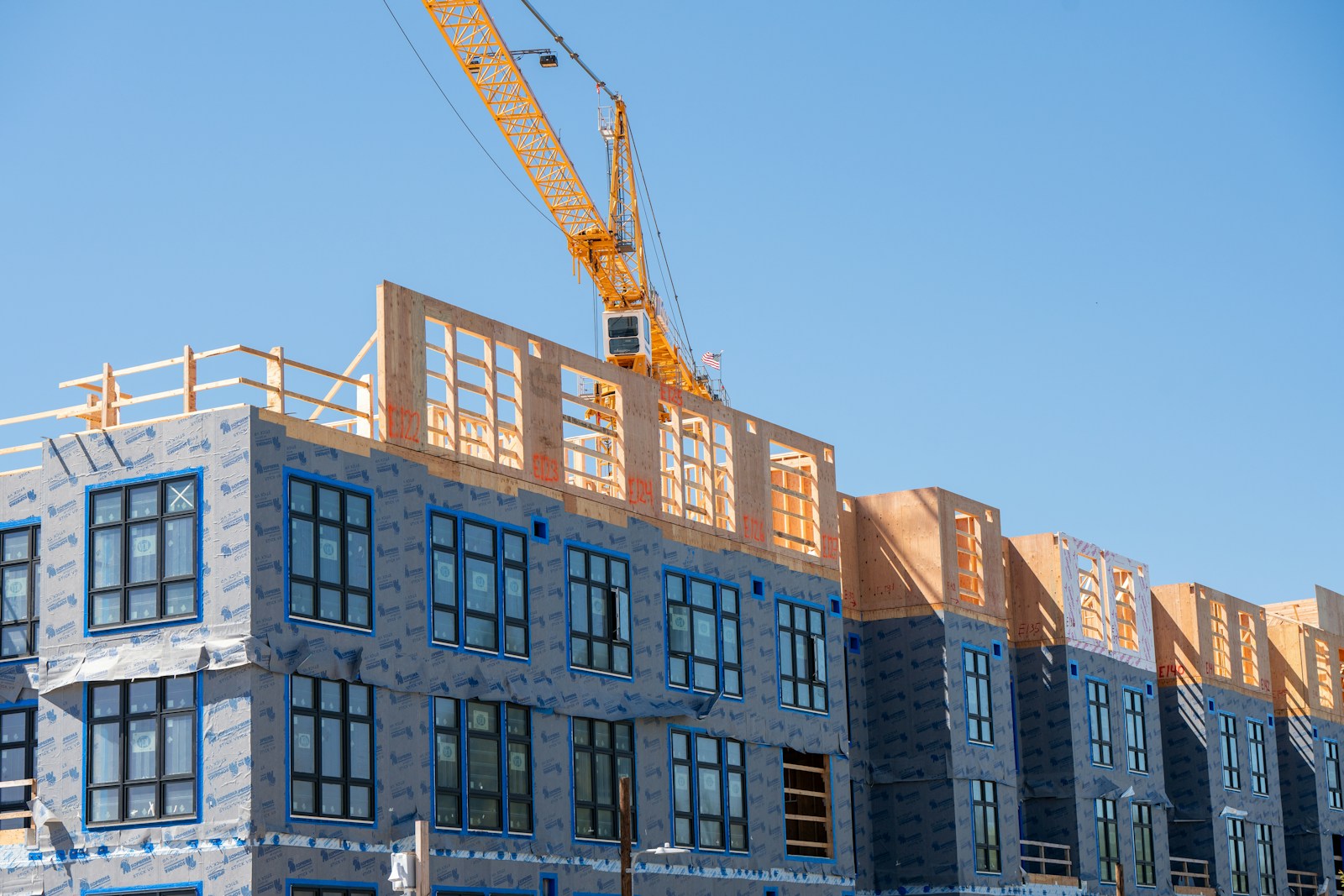
Calgary is experiencing rapid urban expansion, driven by innovative master-planned communities that are redefining suburban living. High-demand neighbourhoods such as Seton, Livingston, and Alpine Park offer a dynamic mix of diverse housing options, top-rated schools, green spaces, retail hubs, and walkable amenities. These thoughtfully designed developments prioritize convenience, sustainability, and family-friendly planning, making them highly attractive to first-time homebuyers, move-up buyers, and growing families seeking long-term property value.

The surge of new construction in these communities is influencing Calgary’s overall real estate market trends. Increased competition among builders helps maintain housing affordability while elevating construction quality, architectural design, and modern features. Surrounding resale markets also benefit from heightened buyer demand, strengthening property values and boosting long-term appreciation potential in adjacent neighbourhoods.

At 2% Realty Calgary, our experienced real estate professionals closely monitor emerging community developments, pre-construction opportunities, and resale market performance. We guide clients through detailed comparisons between new builds and existing homes, helping them align their purchase with their lifestyle goals, investment strategy, and budget.

Calgary’s real estate growth story continues to evolve, and these forward-thinking master-planned communities are shaping the future of the city’s housing market, driving sustainable development, strong buyer demand, and modern community living.

Click here to get more information

Read

What’s Driving Calgary’s Real Estate Growth?

Population growth, jobs, and affordability — here’s why Calgary remains one of Canada’s most resilient housing markets.

Calgary’s real estate market continues to show strong housing growth, supported by steady population growth, stable employment rates, and relative affordability compared to other major Canadian cities. Families, professionals, and newcomers are attracted to Calgary for its quality schools, safe neighbourhoods, and diverse housing options that suit a wide range of budgets.

Economic stability remains a key driver of market strength. Expanding industries, job creation, and business investment continue to attract new residents, increasing both rental demand and homeownership activity. Major infrastructure projects, including new transit expansions and thoughtfully planned community developments, further enhance property values, connectivity, and overall livability.

At 2% Realty Calgary, we closely monitor these market trends and economic indicators to help our clients make strategic real estate decisions. Identifying high growth areas and understanding where future development is concentrated allows investors to target emerging communities with strong appreciation potential, while buyers can secure homes in neighbourhoods positioned for long term value.

Calgary’s housing market remains competitive because it successfully balances affordability, economic opportunity, and lifestyle appeal, making it one of Canada’s most attractive markets for both homeowners and real estate investors.

Read

Is Calgary’s condo market making a comeback?

2% Realty Calgary explores what buyers and investors should know this year.

In 2026, Calgary’s condo market is expected to remain balanced, creating favorable conditions for informed and strategic buyers. Ongoing affordability challenges in the detached home segment will likely keep condominiums in demand among first time buyers, downsizers, and real estate investors. With higher inventory levels available, competition may ease, giving buyers more negotiating power. Price growth is projected to stay moderate, with stability and gradual appreciation rather than rapid increases.

Urban condo communities, particularly in downtown, the Beltline, and transit oriented areas, are anticipated to perform more consistently. Demand from young professionals and renters seeking convenience, accessibility, and lifestyle amenities will continue to support these markets. At the same time, newer suburban condo developments may appeal to buyers searching for modern designs and competitive pricing. However, resale performance will still depend heavily on location, quality of building management, and reasonable condo fees.

Overall, 2026 is shaping up to be a year of steady and sustainable conditions for Calgary’s condo sector. Buyers and investors who focus on long term value, well managed buildings, and strong rental demand are likely to find great opportunities. Sellers may need to price strategically and highlight quality, upgrades, and location to stand out in a balanced and competitive real estate market.

Click here to get more information

Read

January 2026 CREB City And Region Market Reports

Slow start for high-density homes

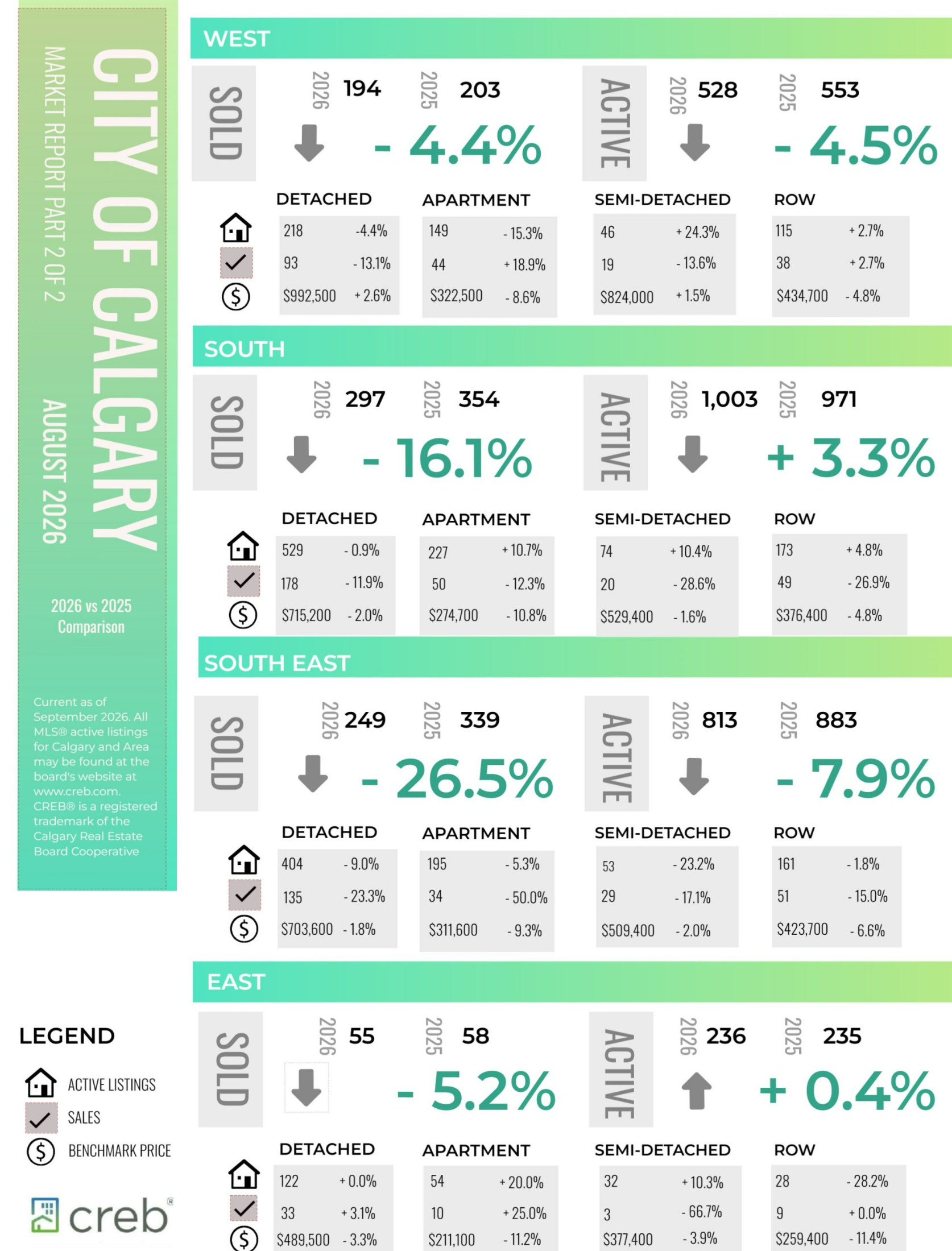
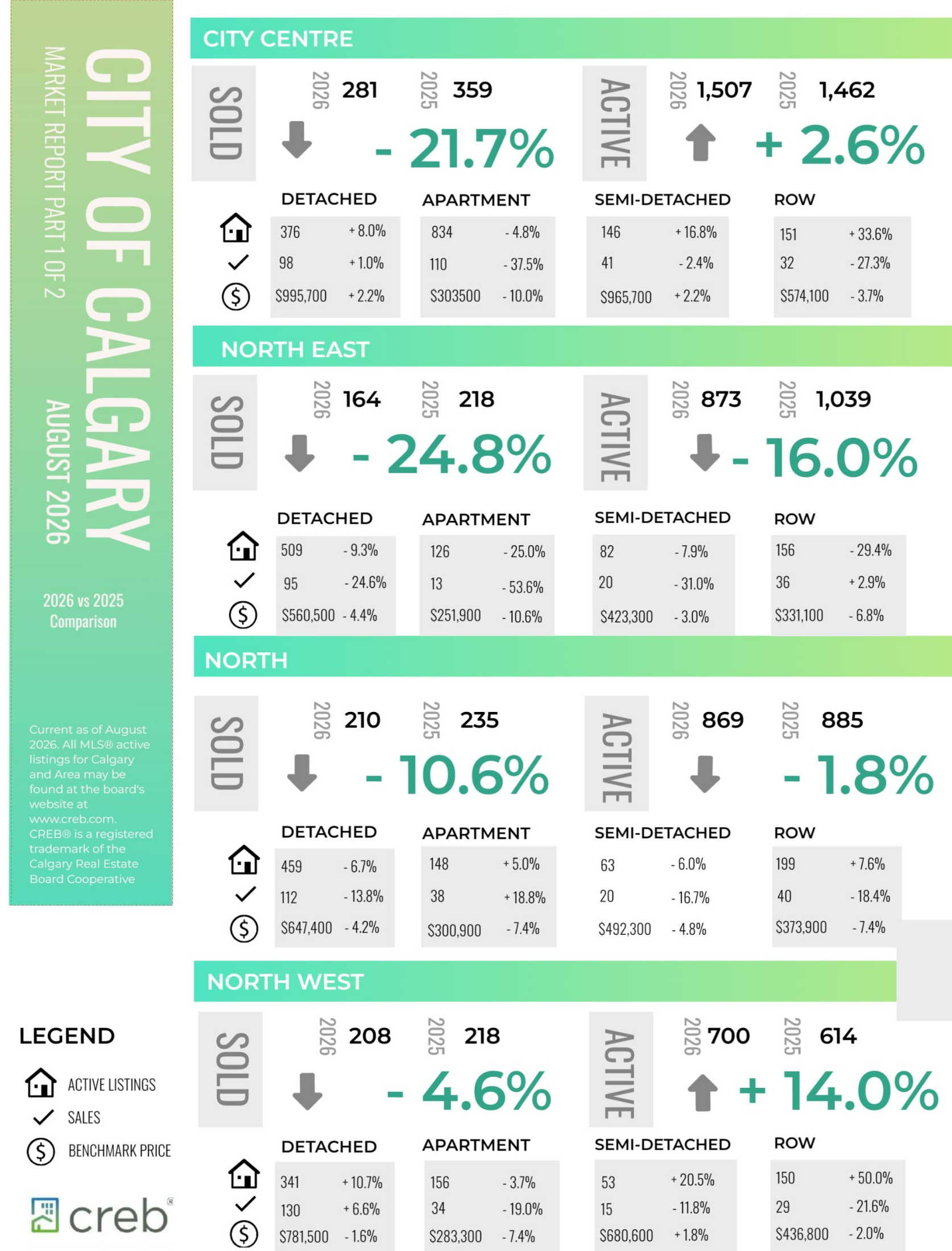
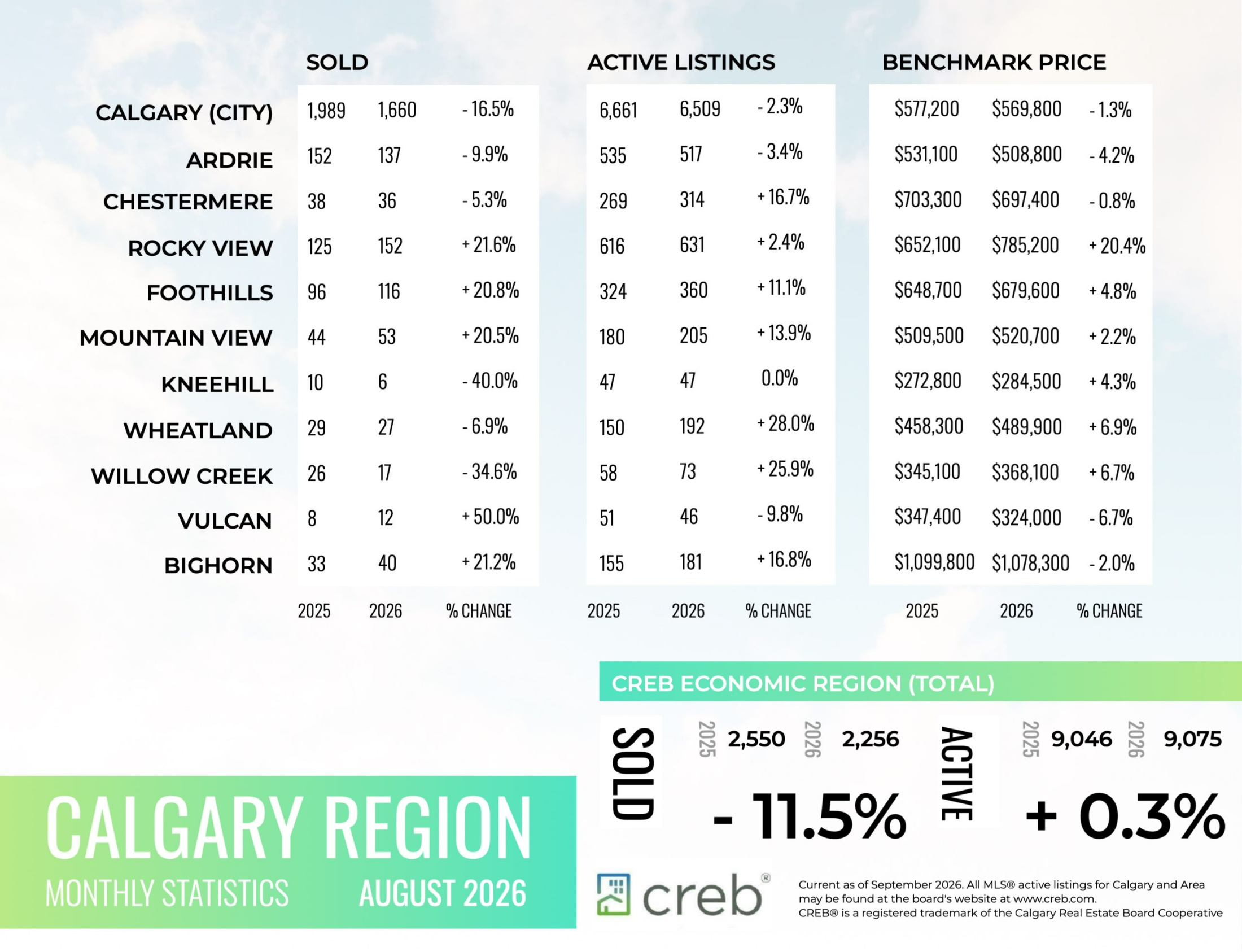
Calgary reported 1,234 home sales in January, reflecting a 15% year-over-year decline, yet still aligning with typical activity levels for this time of year. While sales dropped across all property types, high-density homes, including apartments and row houses, saw the steepest decreases.

“Following the usual December slowdown, buyers of high-density homes were slower to return to the market in January,” said Ann-Marie Lurie, CREB®’s Chief Economist. “With more options available across the market, urgency among buyers has lessened. Meanwhile, sellers were quick to list their homes, driving the sales-to-new-listings ratio down to 44%, largely due to shifts in apartment and row-style properties. This trend is typical for January, as both buyers and sellers carefully consider their plans ahead of the spring market.”

The surge in new listings relative to sales pushed Calgary’s housing inventory to 4,391 units, the highest January level since 2020. Inventory levels differ by property type, with row and apartment homes seeing above-average supply. As a result, months of supply range from under three months for detached homes to five months for apartment-style properties, reflecting varying market conditions across property types.

Read the full report on the CREB website!

Custom real estate infographics published by myRealPage.com

Read

Five Neighbourhoods that Calgarians Love

Calgary is officially one of the best places to live in Canada! Ranked sixth on Numbero’s 2026 Quality of Life Index, 16 spots ahead of Edmonton, our city scores high for affordability, climate, healthcare, safety, and even traffic.

With over 1.7 million residents and 200 neighbourhoods to choose from, it’s no wonder Calgarians have their favourites. Since February is the month of love, we’ve rounded up five neighbourhoods that locals adore, whether to live in or simply visit.

1. Inglewood (SE)
As Calgary’s oldest neighbourhood, Inglewood oozes character and charm. It’s home to art galleries, international restaurants, unique boutiques, a bird sanctuary, and a lively summer night market. Families, creatives, and nature lovers alike are drawn to its soulful atmosphere.

2. Beltline (City Centre)
With a walk score of 91, the Beltline is a hotspot for urban living. From over 100 restaurants, cafes, and lounges to parks, shops, and vibrant street murals, there’s always something happening. On hockey nights, you can feel the community spirit pulse along the “Red Mile,” stretching from the Scotiabank Saddledome to the trendy 17th Avenue.

3. Kensington (NW)
Kensington is full of hidden gems. With easy access to transit, the Bow River, Downtown, a historic cinema, and even a cat café, residents and visitors are never short of things to do. It’s a perfect mix of convenience, culture, and charm.

4. Bowness (SW)
Bowness is loved for its diversity, local businesses, stunning landscapes, and outdoor recreation. Bowness Park is a year-round attraction, with skating on the 1.6 km lagoon trail in winter, and jogging, canoeing, or picnicking under lush trees in summer. It’s a true haven for families and nature enthusiasts alike.

5. Saddleridge (NE)
Saddleridge is a growing community popular with young families. With a variety of schools, easy access to transit and the airport, scenic Saddlecreek Ponds and Bear Park, and the Genesis Centre hosting cultural events year-round, it offers both convenience and community spirit.

No matter your lifestyle, Calgary has a neighbourhood that feels like home. From historic charm to vibrant city living, these five communities are proof that our city has something for everyone.

Want to explore more Calgary neighbourhoods or find your perfect home? Click here to start your journey today!

Read

Timing Matters: When Do Calgary Homes Attract the Most Motivated Buyers?

When it comes to selling your home, when you list can be just as important as how you list. In Calgary’s dynamic real estate market, timing can play a major role in maximizing your sale price and attracting the right buyers.

Spring and early summer are typically the busiest seasons. Families often plan moves before the new school year, and longer days mean brighter showings and stronger curb appeal. That said, fall shouldn’t be overlooked many buyers during this season are highly motivated and eager to secure a home before the holidays.

Sarah with 2% Realty closely tracks seasonal market trends to help sellers choose the best timing based on their property type and location. Detached homes often see peak demand in the spring, while condos and investment properties may gain more traction in late summer or early fall.

No matter the season, pricing and presentation remain key. With professional marketing, accurate home valuations, and strong digital exposure, Sarah with 2% Realty ensures your property stands out and attracts serious buyers year-round.

Selling a home is all about strategy and timing is one of your most powerful advantages. Partner with Sarah with 2% Realty to plan smart and sell with confidence.

Ready to maximize your sale price? Click here to Get Your Free Calgary Home Evaluation Today

Read

CREB® Unveils 2026 Forecast Calgary and Region Yearly Outlook Report

The Calgary Real Estate Board (CREB®) has released its 2026 Calgary and Region Forecast Report, prepared by Chief Economist Ann-Marie Lurie. The report outlines expected trends in Calgary’s economy and housing market.

After several years of strong construction, housing supply is increasing, while demand is easing due to slower migration and changing economic conditions. In 2025, the market shifted from seller-friendly to more balanced, helping reduce price pressure—especially for apartments and row homes.

Looking ahead to 2026, lower migration, stable employment, and steady interest rates are expected to keep demand relatively flat. At the same time, about 26,000 homes currently under construction will add continued supply over the next few years. Most of this growth will be in apartment-style units, which may place downward pressure on apartment and row home prices. Detached and semi-detached homes are expected to remain more balanced, supporting stable prices.

The report also notes potential risks and opportunities. A new federal-provincial agreement could boost confidence and investment in Calgary’s energy sector. However, uncertainty around CUSMA renegotiations and lower energy prices could slow business investment.

Click here to read the full CREB® 2026 Forecast Calgary and Region Yearly Outlook Report. 

Read

Calgary Home Prices: What to Expect in 2026

Wondering where Calgary’s housing market is headed? 2% Realty Calgary breaks down price trends and predictions for 2026.

After several years of steady appreciation, the housing market in Calgary is showing signs of balance. Detached homes continue to perform strongly, while townhomes and condos remain popular for first-time buyers and downsizers. The current environment reflects a healthy equilibrium between supply and demand, where realistic pricing and quality presentation are key to quick sales.

At 2% Realty Calgary, our agents analyze current data, track buyer behavior, and monitor economic indicators that influence property values. With interest rates stabilizing, more buyers are re-entering the market, leading to renewed activity in the mid-range price brackets. Well-maintained homes in sought-after neighborhoods continue to attract multiple offers when priced accurately.

For sellers, 2026 presents an opportunity to capitalize on buyer confidence without overpricing. For buyers, it remains an excellent time to secure long-term value before the next upward cycle.

Whether you are buying or selling, 2% Realty Calgary provides detailed market insight so you can make smart, informed decisions.

Click here to contact our team for more information.

Read

March 2023 Housing Market Update
MARCH HOUSING MARKET UPDATE
April 3, 2023

Prices rise as conditions favour the seller

Sales and new listings have improved over the levels reported at the beginning of the year. As a result, the spread between sales and new listings supported some expected monthly inventory level gains. However, the 3,233 available units reflected the lowest March inventory levels since 2006 and left the months of supply just above one month, firmly in the seller’s territory. While conditions are not as tight as last March, low inventory levels leave purchasers with limited choice, once again driving up home prices.

Total unadjusted residential home prices reached $541,800 in March, a two per cent gain over last month and nearly one per cent higher than prices reported last year. While prices remain below the May 2022 high of $546,000, the pace of price growth over the first quarter has been stronger than expected due to the persistent seller’s market conditions.

“As expected, sales have eased from record levels while remaining stronger than they were before the pandemic thanks to recent gains in migration supporting demand,” said CREB® Chief Economist Ann-Marie Lurie.

“The challenge has been centered around supply. As a result, existing homeowners may be reluctant to list as they struggle to find an acceptable housing alternative in this market. At the same time, higher lending rates can also reduce the incentives for existing homeowners to list their home.”

March recorded 3,318 new listings compared to the 2,432 sales, leaving the sales-to-new listings ratio relatively high at 73 per cent. However, both sales and new listings have eased by 40 per cent compared to levels reported last March.

Source: CREB

Read
Data is supplied by Pillar 9™ MLS® System. Pillar 9™ is the owner of the copyright in its MLS®System. Data is deemed reliable but is not guaranteed accurate by Pillar 9™.
The trademarks MLS®, Multiple Listing Service® and the associated logos are owned by The Canadian Real Estate Association (CREA) and identify the quality of services provided by real estate professionals who are members of CREA. Used under license.